In a hospital in Shanghai, neurologist Sun Bomin was trying to ease his elderly mother’s muscle spasms when something unexpected happened.
The experimental procedure he used, a form of high-intensity focused ultrasound, did more than calm her dystonia. Her long-silent mind seemed to switch back on, challenging the entrenched idea that Alzheimer’s can only move in one direction.
A family case that turned into a clinical trial
For nearly eight years, Sun’s mother had lived with very advanced Alzheimer’s. In her nineties, she no longer recognized relatives, had lost her sense of time and barely reacted even to the death of close family members. Doctors sometimes describe this late stage as a kind of “passive silence”, where daily life shrinks to basic care and routine.
In 2024, as director of the functional neurosurgery center at Ruijin Hospital, Sun decided to treat her dystonia, a movement disorder that caused painful involuntary contractions and severe tongue protrusion.
The goal was to help her body, not her memory. She received a session of high-intensity focused ultrasound, guided by MRI, which concentrates sound energy deep inside the brain without opening the skull.
What happened next caught everyone off guard. Within weeks, carers and relatives reported that she was recognizing family again, expressing emotions and even handling mental tasks used in standard dementia tests, such as counting backward from one hundred in steps of seven.
Sun later said that the experience “shattered” his belief that Alzheimer’s is always incurable and pushed him to design a small clinical study.
How the so-called magnetic wave knife works
The technology at the center of this story is known as focused ultrasound. Sun sometimes calls it a “magnetic wave knife”, even though it does not cut in the traditional sense.
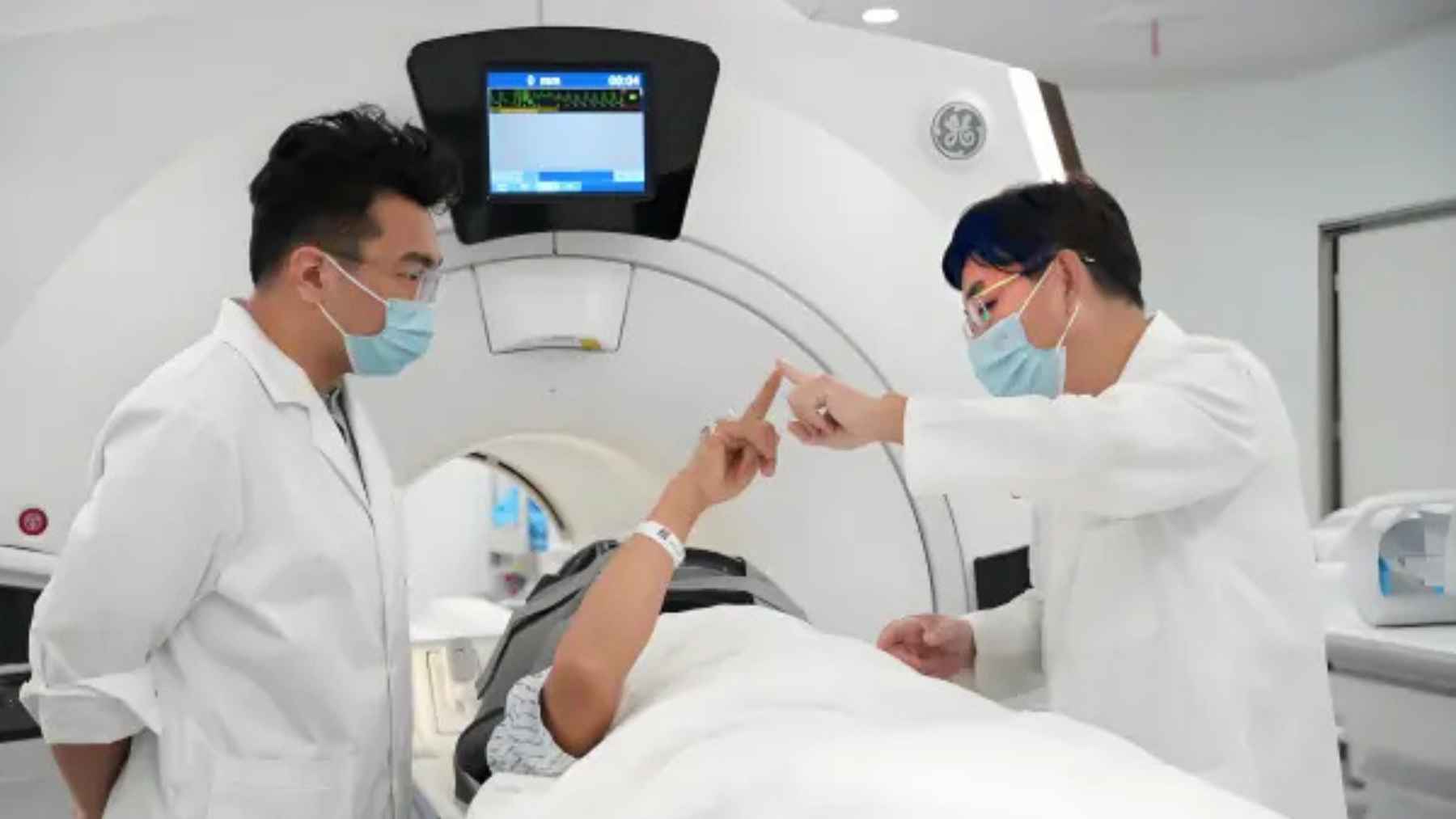
Patients lie inside an MRI scanner wearing a helmet packed with 1,024 tiny transducers. These components convert electrical energy into ultrasound waves that travel safely through the skull until they all converge on a single point inside the brain.
That focal point is where the action happens. At high power, focused ultrasound can heat and destroy tissue, which is already used in some countries to treat tremor and certain tumors.
At lower or carefully controlled levels, the same waves can gently vibrate brain tissue or make microscopic bubbles in blood vessels oscillate. This vibration can temporarily open the blood-brain barrier, a cellular shield that normally keeps both toxins and many drugs out of the brain.
Researchers suspect that this temporary opening, combined with mechanical “shaking” of nerve circuits, might help clear abnormal protein deposits or restart sleepy neural pathways in Alzheimer’s. Sun himself admits that “what exactly is being changed is still unknown”, which is an important note of caution.
Seven patients, uneven gains and many open questions
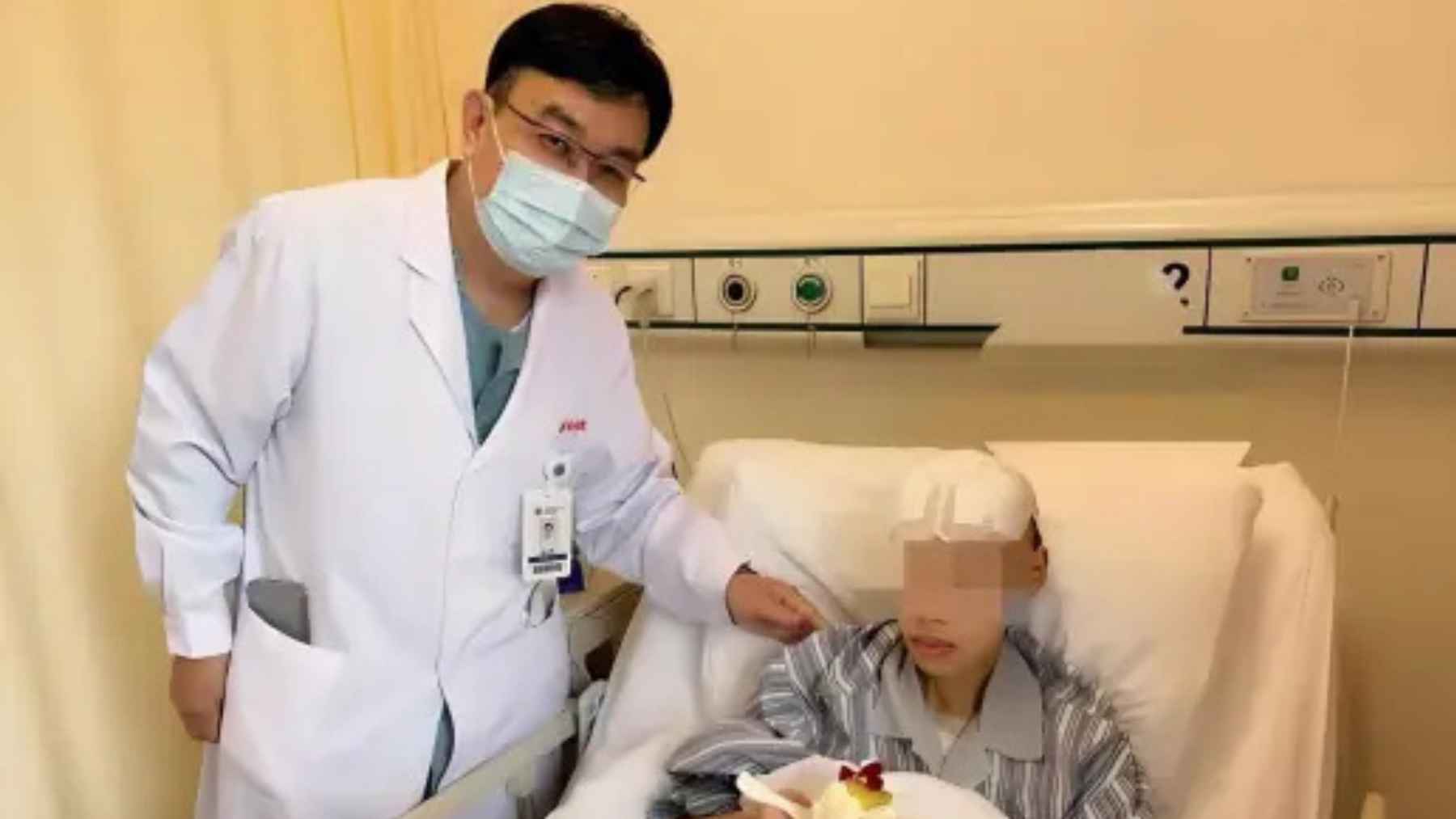
Encouraged by his mother’s case, Sun secured ethics approval and began a trial with seven people who had moderate to severe Alzheimer’s. All wore the ultrasound helmet inside an MRI scanner so the team could target specific brain areas in real time.
According to reports, two patients with very advanced disease showed noticeable changes as soon as the day after treatment, though these gains gradually faded. The remaining participants experienced improvements of roughly 50% on average in cognitive measures and daily functioning.
One woman, identified under the pseudonym Wang Guifang, had previously sat idle with a vacant expression. After focused ultrasound, she reportedly began doing household chores again, from washing clothes to folding bedding. She also rediscovered her love of singing and started asking her family to take her to karaoke every weekend, a small but vivid sign of recovered initiative.
At the same time, this is still a very small, early stage experiment. Sun has not yet published the Alzheimer’s results in a peer-reviewed journal and stresses that some patients relapsed after initial gains.
Side effects described so far include mild brain swelling, headaches and dizziness that tend to resolve within about a week, which lines up with other focused ultrasound trials in dementia.
How does this fit into Alzheimer’s research?
Internationally, most focused ultrasound work in Alzheimer’s has taken a different route. Teams in North America and Europe have used lower-intensity ultrasound combined with injected microbubbles to open the blood brain barrier for a short window, then deliver antibody drugs that target amyloid or tau proteins.
Early studies, including one in The New England Journal of Medicine, suggest this approach can safely enhance drug delivery and may boost plaque removal, although it has not yet produced a simple cure.
Sun’s project stands out because he is testing ultrasound as a primary therapy rather than mainly as a helper for drugs. According to coverage in Sixth Tone, his team is still trying to work out how long the benefits last, whether people need repeat sessions and which brain regions are the best targets.
All of this is happening in a country where dementia cases have risen sharply. Estimates suggest that Fudan University researchers now count around seventeen million people in China living with Alzheimer’s or related dementias, a jump from about four million in 1990.
Families there face the same everyday challenges seen worldwide, from wandering at night to repeated questions at the breakfast table, so any hint of progress draws intense attention.
For the most part, experts urge patience. A single family story, even backed by a tiny trial, is not enough to change clinical practice or to guarantee that a new technology will work at scale.
Focused ultrasound is promising because it is noninvasive and image guided, yet researchers still need larger, longer studies to understand who might benefit, how often and at what cost to the health system and to patients who already juggle medication schedules, appointments and rising medical bills.
So what should readers take away right now? Focused ultrasound is one of the more hopeful frontiers in Alzheimer’s research, but it remains an experimental tool, not a ready-made cure for loved ones who are already struggling.
Anyone worried about memory loss or dementia symptoms should talk with a qualified healthcare professional before considering any new treatment.
The report was published on Sixth Tone.