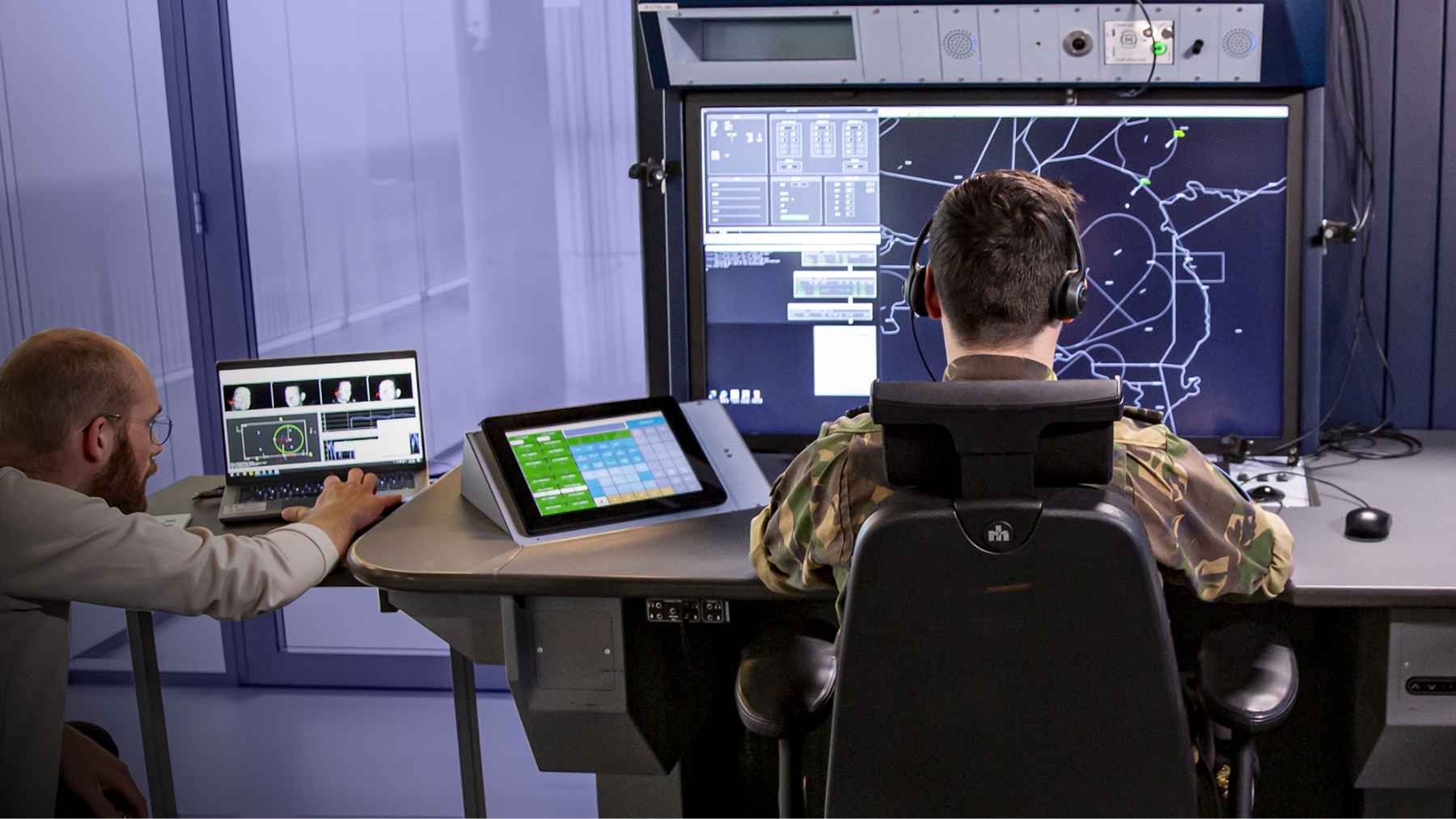
Military pilots in the Netherlands are taking part in a very unusual experiment. While they fly through virtual clouds in a flight simulator, electrodes on their scalp send brain signals into an artificial intelligence system that estimates how hard their brain is working and quietly tweaks the mission in real time.
The goal is to keep pilots mentally alert without pushing them into overload, while relying more on simulators that use electricity instead of jet fuel.
What does that have to do with the environment or your energy bill? Modern air forces already lean heavily on simulators to cut costs, emissions, and risk. Studies on pilot training show that shifting more hours from real aircraft to simulators can cut training related CO2 emissions by as much as seventy percent, since simulators burn no fuel and produce no direct exhaust.
If smarter simulators keep pilots learning effectively for longer on the ground, that can support greener training programs that send jets into the sky only when it truly matters.
How the Dutch system reads pilot workload
The project is led by researchers at the Royal Netherlands Aerospace Centre together with the Royal Netherlands Air Force. In virtual reality missions, trainee fighter pilots wear an electroencephalography cap that records electrical activity from the brain.
An AI model reads those patterns and estimates cognitive workload, in other words how demanding the task feels moment to moment.
If the system detects that the pilot seems under-challenged, the simulator quietly makes conditions harder, for example by reducing visibility. If the signals suggest rising strain, the next segment becomes a little easier.
From the pilot’s point of view, the mission simply feels like a sequence of changing weather and difficulty, similar to the way real flying rarely follows a tidy lesson plan.
Fifteen student pilots tested the prototype in a controlled study. They flew two types of training sessions, one with difficulty fixed in advance and one where the AI adjusted five levels of difficulty on the fly based on their brain activity.
Pilots like it, performance not yet
After the flights, pilots filled out questionnaires and took part in interviews. Many said that the adaptive simulator felt more realistic and more engaging than a predictable training script, and most expressed a clear preference for the neuroadaptive version once they were told how it worked.
The numbers told a cooler story. When researchers compared objective performance and self-reported workload between the adaptive sessions and the classic fixed program, they found no significant differences. In both cases, performance dropped as pilots felt more mentally loaded. For the most part, the AI had not yet delivered faster learning, even if the experience felt better.
One likely reason is that brains differ a lot from person to person. The AI model had been trained on data from other novice pilots, which meant it read some participants well and others poorly. In several cases, workload levels barely seemed to change, suggesting the system was not interpreting those individual brain signals correctly.
A glimpse of future cockpits and cleaner skies
Researchers are already looking beyond the simulator. Experts such as James Blundell at Cranfield University note that similar brain and stress monitoring tools might one day help real aircraft detect panic or disorientation and guide pilots back toward safer flight.
For an environmental newsroom, the interest sits in a different place. Aviation faces intense pressure to cut its climate footprint, from commercial airlines to military fleets. Simulator hours already reduce fuel burn, noise, and emissions compared with real sorties, and some analyses suggest expanded simulator use could trim training related CO2 by up to seventy percent.
If neuroadaptive systems eventually make simulator training more efficient and personalized, they could help keep more of that learning on the ground instead of in the sky.
There are open questions, of course. Who controls sensitive brain data from soldiers, how reliable these systems can become, and whether their energy use is offset by avoiding jet fuel are all still under debate. Yet to a large extent, the Dutch experiment shows how neuroscience, AI, and climate-minded training can start to intersect, even in a fighter cockpit.
The study was published on arXiv.