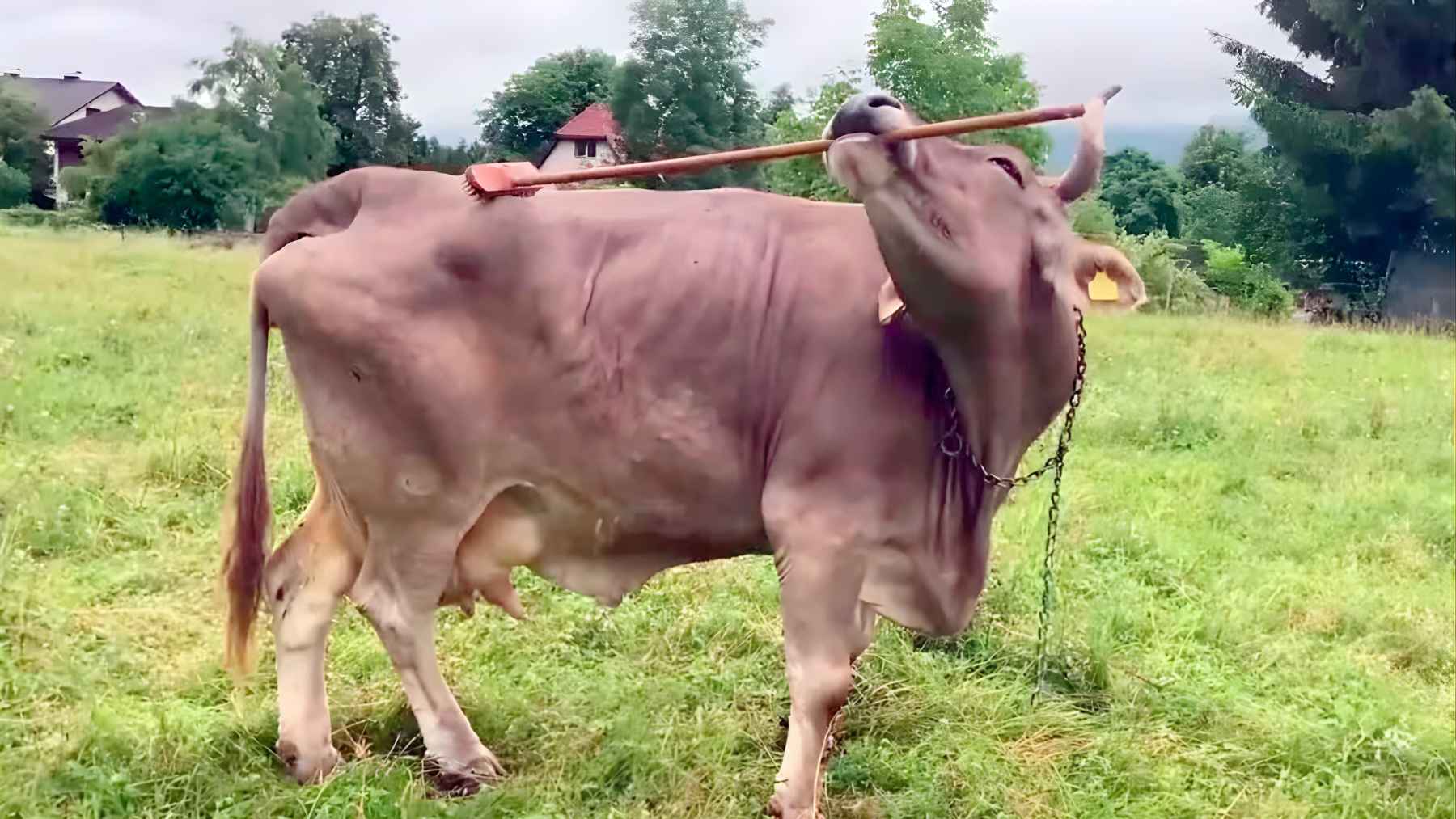
Veronika is a Swiss Brown cow who lives in the village of Nötsch im Gailtal in southern Austria, where organic farmer Witgar Wiegele has watched her closely for years. He noticed that she sometimes picked up fallen branches or wooden sticks and used them to reach spots on her body she could not scratch in any other way.
Over time, her technique seemed to improve. Wiegele saw her respond to family voices, show rich social behavior with other cows, and repeatedly choose specific objects when she needed relief. For most people, that might be a charming farm story you tell over dinner.
For cognitive biologists at the University of Veterinary Medicine Vienna, it was something else entirely. After they were alerted to the videos, a team led by Antonio J. Osuna-Mascaró drove to the farm and set up controlled tests to see whether this was random play or true tool use.
What scientists actually saw Veronika do
In their experiments, the researchers placed a broom in different positions around Veronika while she rested or stood in her pasture. She would reach for it with her tongue, pull it into a better angle, then clamp it between her teeth like someone gripping a rake in both hands.
The team filmed dozens of these sessions. They found that Veronika chose how to use each part of the broom depending on the body area she wanted to reach. The stiff bristles went on the thick skin of her back, while the smooth wooden handle touched more sensitive zones such as the belly and udder.
Scientists call this kind of behavior tool use when an animal intentionally grabs an external object to achieve a clear goal, in this case scratching an itch. Because Veronika uses different parts of the same broom for different purposes, the study describes it as flexible, multipurpose tool use.
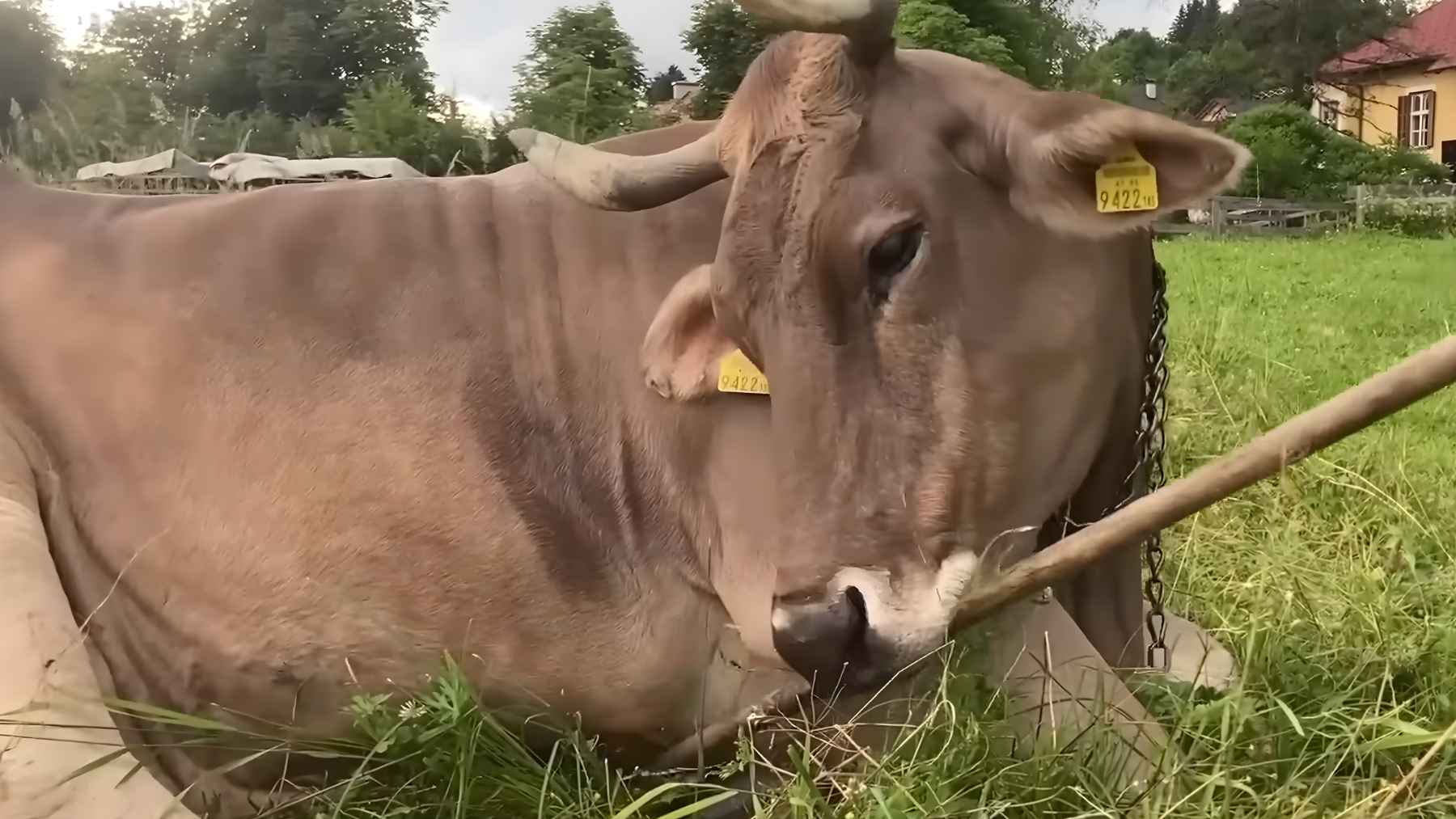
Innovation in the Field: Veronika demonstrates advanced cognitive skills by using a wooden stick as a multipurpose tool for grooming.
Why this challenges ten thousand years of assumptions
Humans have shared fields and barns with cattle for at least ten thousand years, mainly seeing them as sources of meat, milk, leather, or pulling power.
The new findings suggest that during all that time we may simply not have been paying close enough attention to what cows are capable of when they have time, space, and objects to explore.
Osuna-Mascaró notes that the behavior shows cows can innovate in their use of tools and that people have largely ignored this potential. He has called it surprising to discover such a skill only now, after so many generations of living side by side with them.
What it means for how we see farm animals
Until recently, multipurpose tool use was thought to belong almost entirely to humans and a handful of primates such as chimpanzees, which use twigs to fish for termites or stones to crack nuts.
Veronika’s broom work puts cattle into that very select group, at least in terms of what they can potentially do.
Independent experts say this is not just a cute anecdote. Evolutionary biologist Marc Bekoff argues that the case supports the idea that cows are sensitive beings with advanced mental skills, and that Veronika probably reflects a wider, underestimated intelligence in cattle rather than a one in a million genius.
All of this may feel distant from daily life, until you remember how many dairy and beef products pass through a typical grocery cart. If cows can plan, experiment, and solve problems in this way, it adds another layer to ongoing debates about farm animal welfare and how much mental stimulation they should have in barns and feedlots.
Could other cows be using tools when no one is watching
There is an important catch. Veronika is only one cow. Researchers are careful to say that the study proves the capacity exists but does not tell us how common this behavior might be in the global cattle population, which numbers in the billions.
Even so, the team suspects that other cows might show similar creativity if they live longer lives, have closer contact with humans, and get access to objects they can manipulate.
They have encouraged farmers and vets to share any footage of animals using sticks, brushes, or tools in inventive ways, which could help reveal just how often this kind of thing happens out in the fields.
The main study has been published in Current Biology.