Can a cluster of lab-grown neurons learn something useful without a body, senses, or anything like everyday experience? Researchers at the University of California, Santa Cruz say it can, at least for a short stretch, after training mouse-derived brain organoids to tackle the classic cart-pole problem, where a virtual pole has to stay upright on a moving cart.
Under adaptive feedback, the organoids reached a 46% success rate, compared with 4.5% under random training.
That may sound like another AI headline, but the most interesting part is actually about biology. The study suggests that neural plasticity, the ability of neurons to adjust and reorganize, may be intrinsic to living cortical tissue itself, even in very stripped-down lab models.
Researchers say that insight could help scientists study how learning is disrupted in conditions such as Alzheimer’s disease, Parkinson’s disease, schizophrenia, and ADHD.
Why a falling pole matters
Why use a virtual falling pole instead of a maze or pattern game? Because the cart-pole problem is one of engineering’s cleanest tests of real-time control, used in robotics, control theory, and AI to see whether a system can respond to constant change instead of selecting one fixed answer. It is simple to describe and surprisingly hard to master.
Anyone who has tried to balance a broom or ruler on a fingertip already knows the logic. Small mistakes snowball fast, so the system has to keep reading the situation and making tiny corrections moment by moment. That is what makes the task such a useful benchmark, and such an unforgiving one.
How the mini-brains got their instructions
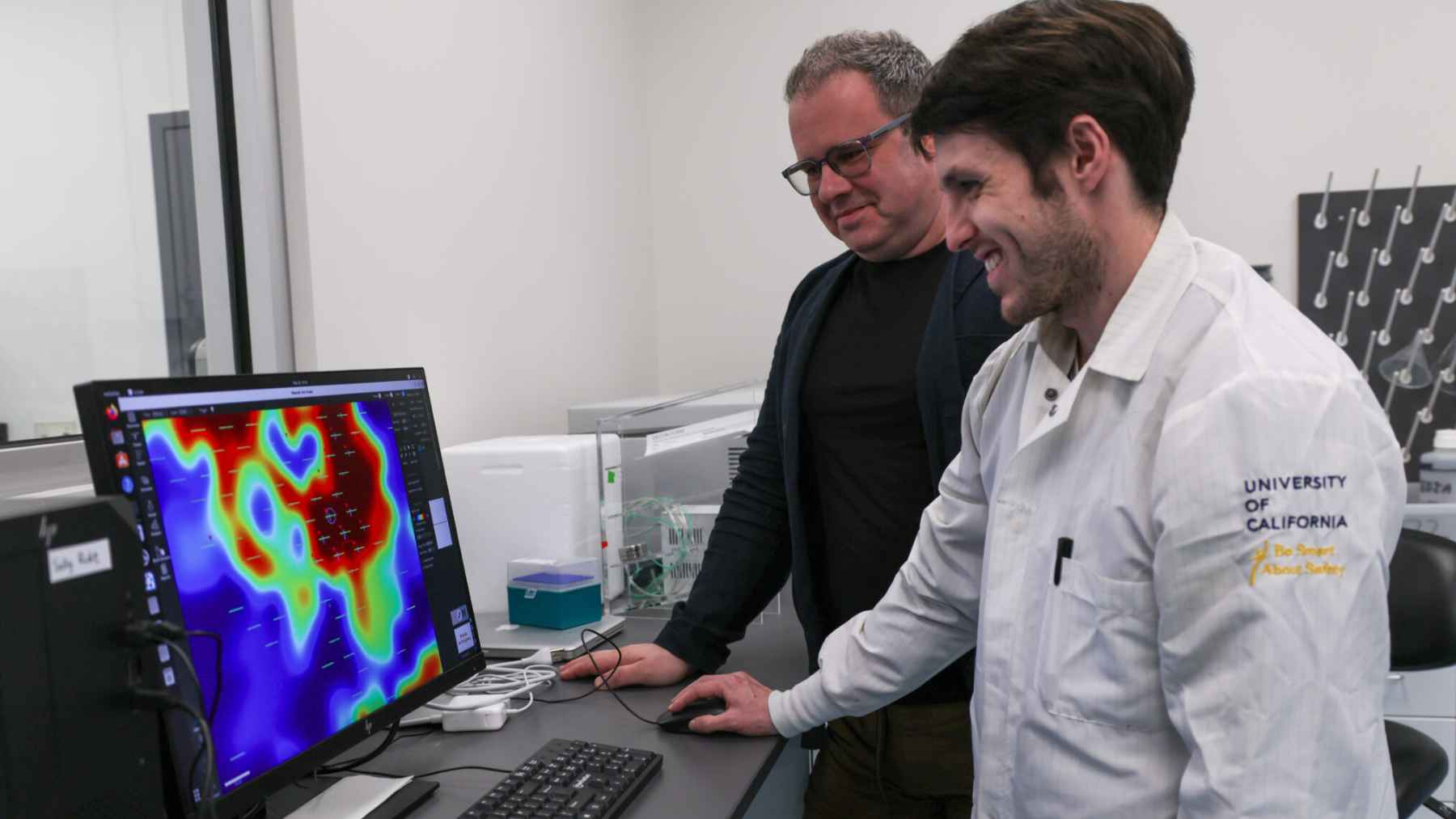
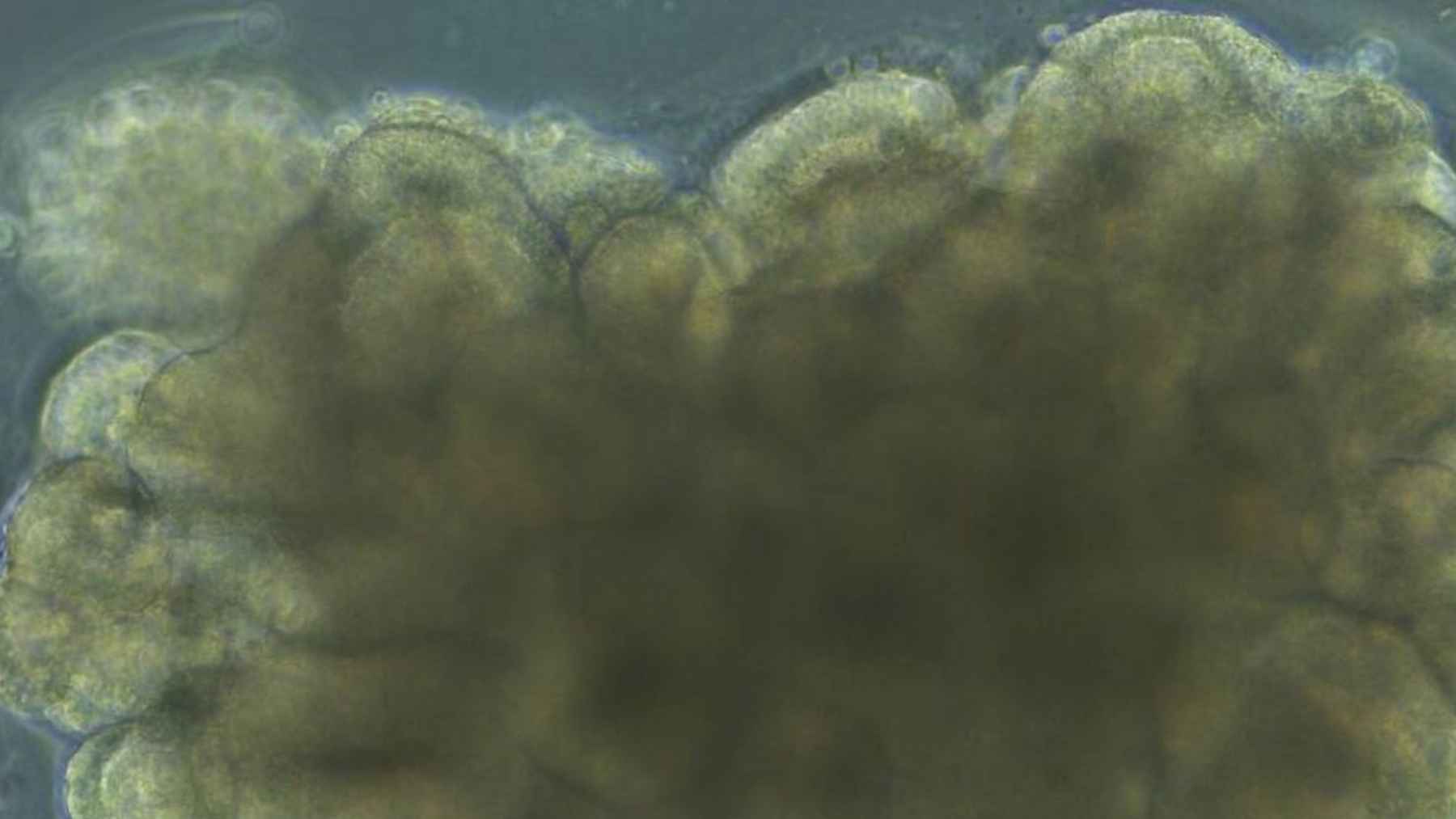
The organoids in this study were grown from mouse stem cells and contained networks of neurons capable of firing electrical signals. Some were smaller than a peppercorn, yet they still held millions of neurons. Placed on specialized chips, the tissue could both receive stimulation and send back activity, creating a closed loop between the living cells and the virtual pole.
Researchers used stronger or weaker electrical signals to tell the organoid which way the pole was tipping. The organoid’s response was then translated into force on the cart, and an artificial reinforcement learning system decided which neurons to stimulate after each disappointing stretch of performance, not while the pole was being balanced, but after an episode ended.
As Ash Robbins put it, “When we can actively choose training stimuli, we can actually shape the network to solve the problem.”
What the numbers actually show
The team measured progress in repeated episodes, resetting the pole each time it fell and comparing recent performance with earlier runs. Adaptive training pushed about 46% of cycles past the success threshold the researchers set, while random training hit only 4.5%. That is not a small bump, it is the difference between noise and a pattern worth taking seriously.
That matters because the task does not have one tidy solution to memorize. It demands a stream of corrections, one after another, a bit like keeping a bicycle steady or trying not to spill coffee when the car lurches at a stoplight. For the most part, that is why scientists see cart-pole as a real learning test rather than a lab trick.
Why this matters beyond AI
This is where the story takes an interesting turn. The UCSC team describes the work as the first rigorous academic demonstration of goal-directed learning in brain organoids, which gives researchers a simpler biological system for asking how learning emerges in living tissue.
That does not mean organoids are replacing AI, but it does mean biology still has lessons that software alone cannot fully capture.
It also opens a practical door for medicine. If scientists can watch how minimal neural circuits adapt, fail, and recover under controlled conditions, they may get a clearer view of what changes in disorders that affect learning and cognition. That could make organoids more useful for studying diseases such as dementia, stroke, schizophrenia, autism, and Parkinson’s disease.
The limits may be just as important
Still, the result comes with an important reality check. After about 15 minutes of pole balancing and then a 45-minute rest, the organoids’ performance dropped back to baseline, which points to short-term learning rather than lasting memory.
That may sound like a setback, but it is actually useful because it shows exactly where the system still falls short.
The paper adds another clue that makes the result more convincing. When researchers blocked AMPA and NMDA receptors, two key parts of glutamate signaling in the brain, the performance boost disappeared. In other words, the gains seem to depend on ordinary neural plasticity mechanisms, not just a lucky burst of electrical activity.
So no, this is not a case of a “mini-brain” waking up or outperforming modern AI. What it shows, more quietly and perhaps more usefully, is that even a very minimal living neural network can be nudged into solving a dynamic problem, and that could reshape how scientists study learning itself.
The study was published in Cell Reports.