What if one of the biggest obstacles to cleaner cars and cheaper wind power is not the battery, but the magnet buried deep inside the machine?
A new study from the University of New Hampshire suggests artificial intelligence can sharply speed up the hunt for magnetic materials that could reduce the need for rare-earth elements, the strategically important inputs used in many electric motors and generators.
Researchers built a public database called NEMAD and used it to identify 25 previously unreported high-temperature ferromagnetic candidates.
That matters because the clean-energy economy still depends, for the most part, on a narrow supply chain for permanent magnets.
The International Energy Agency says rare earth elements are essential for the magnets used in EV motors and wind turbines, while the U.S. Department of Energy notes that almost all hybrid and plug-in EVs use rare-earth permanent magnets in their traction motors.
In practical terms, that means a materials problem hidden inside the motor can ripple outward to factory costs, industrial planning, and eventually the technologies people rely on every day.
AI turned a mountain of papers into a materials map
The team started with a reading task no ordinary lab could do at any reasonable speed. According to the study, the researchers compiled 100,000 article identifiers from Elsevier and American Physical Society journals, then used large language models and custom parsing tools to pull out magnetic, chemical, and structural data.
That process fed a database with 67,573 entries, 84 different elements, and 15 material features, from crystal structure to coercivity and magnetization.
One reason the database matters is that heat is a deal-breaker for magnets. NEMAD tracks Curie temperature, the point where a material loses its magnetic ordering, which is crucial for parts that must keep working in hot conditions such as EV motors and generators.
Lead author Suman Itani said the aim is to “reduce dependence on rare-earth elements,” while also helping cut costs for electric vehicles and renewable energy systems.
The models then moved from sorting data to making predictions. They reached 90% accuracy when classifying materials as ferromagnetic, antiferromagnetic, or non-magnetic, and the best Curie temperature model achieved an R² of 0.87 with a mean absolute error of 56 kelvin.
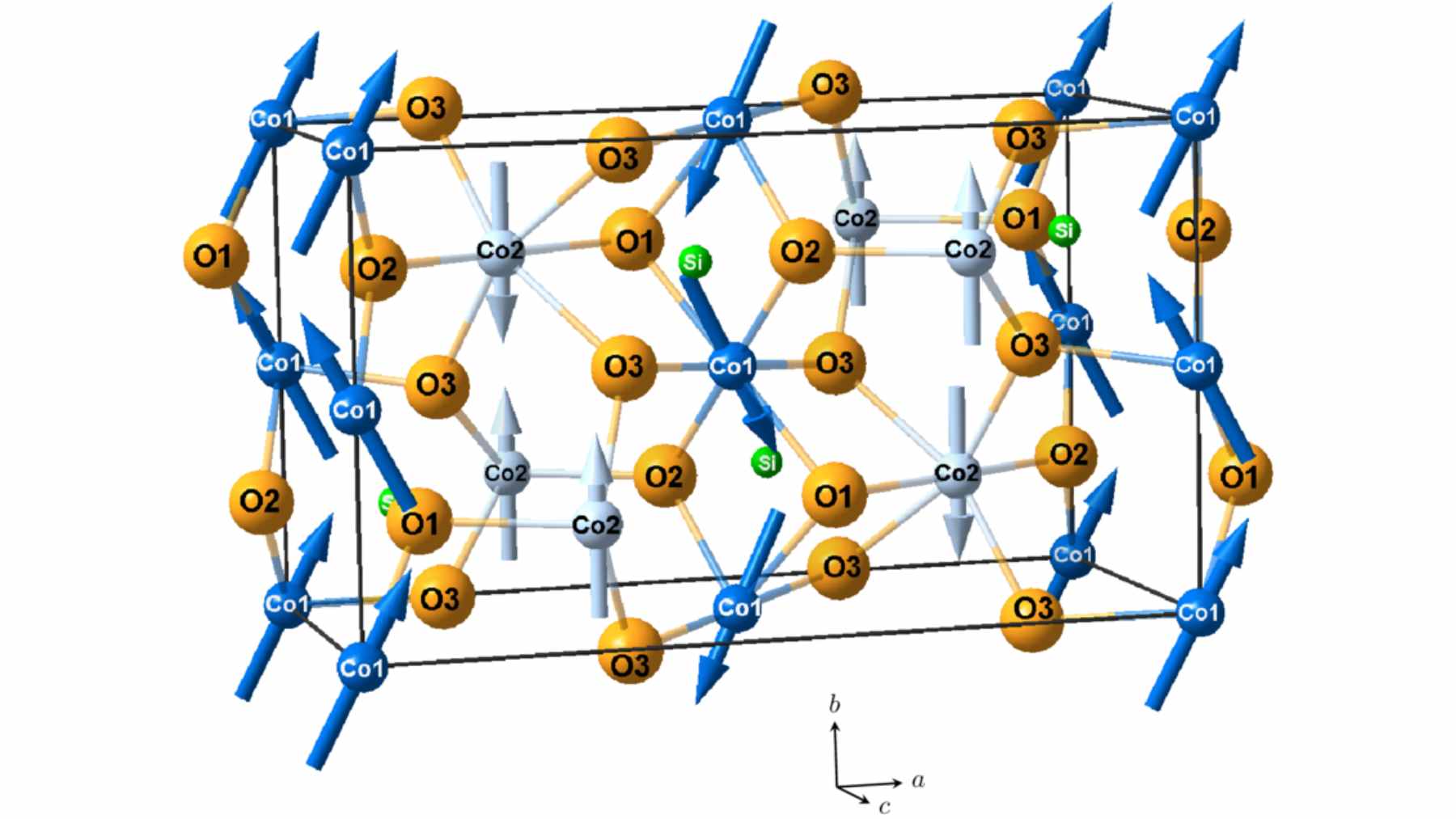
Among the strongest hits was GaFe2Co4Si, a predicted ferromagnetic candidate with a Curie temperature of about 1,005 kelvin, or roughly 732 degrees Celsius (about 1,350 degrees Fahrenheit).
Why cleaner tech keeps running into a magnet problem
Permanent magnets are small components with outsized importance. The IEA says rare earth elements are essential for magnets used in wind turbines and EV motors, and DOE says the auto industry expects internal permanent magnet motors to remain dominant in electric drive vehicles over the next decade because they combine high power density with strong efficiency.
That is why this story is bigger than a lab curiosity, even if most consumers never think about the magnet behind the wheel.
But there is a supply chain problem hanging over all of this. The IEA says the average market share of the top three refining nations for key energy minerals rose from about 82% in 2020 to 86% in 2024, with China responsible for supply growth in rare earth refining, and its 2025 outlook says China is still on track to supply around 80% of refined rare earths in 2035.
USGS data also show China accounted for 71% of U.S. imports of rare-earth compounds and metals in 2021 through 2024.
The weak point is not just concentration on paper, but how exposed the system becomes when something goes wrong. In an IEA stress test that removes the largest supplier from the balance, remaining rare-earth supply in 2035 would cover only 35 to 40% of the demand outside that supplier.
Add in the fact that USGS says recycling still recovers only limited quantities of rare earths from batteries, permanent magnets, and fluorescent lamps, and the bottleneck starts to look a lot more real.
A promising shortcut, not a finished solution
Still, this is not a miracle material story, at least not yet. The compounds identified by the model are candidates that still need experimental verification, and that distinction matters because predicted performance on paper does not automatically translate into manufacturable, durable, low-cost magnets.
Jiadong Zang described the search for sustainable permanent magnet alternatives as “one of the most difficult challenges in materials science,” which is a useful reminder to keep expectations grounded.
Even so, the results already look more substantial than a random guess. The study says 7 of the screened high-probability compounds were later found in the literature with experimentally reported magnetic ordering temperatures, which supports the model, while the remaining 25 still stand as new experimental targets.
In other words, AI is not replacing the lab here—it is acting like a map that tells researchers where to look first.
That may be the most important part of this whole story, because the researchers say the same LLM-based approach could also be adapted to other materials fields, including superconducting, thermoelectric, photovoltaic, and ferroelectric materials.
If even a handful of these candidates survive real-world testing, they could help reduce pressure on rare-earth inputs, diversify supply for motors and generators, and give the clean-energy transition a little more room to breathe.
The study was published in Nature Communications.