A 307-million-year-old skull reveals that one of the earliest land animals had teeth built to crush and grind tough plants.
That finding shows animals began eating plants much sooner after moving onto land than scientists once believed, changing how we understand the first land-based food webs.
Stump skull surprise
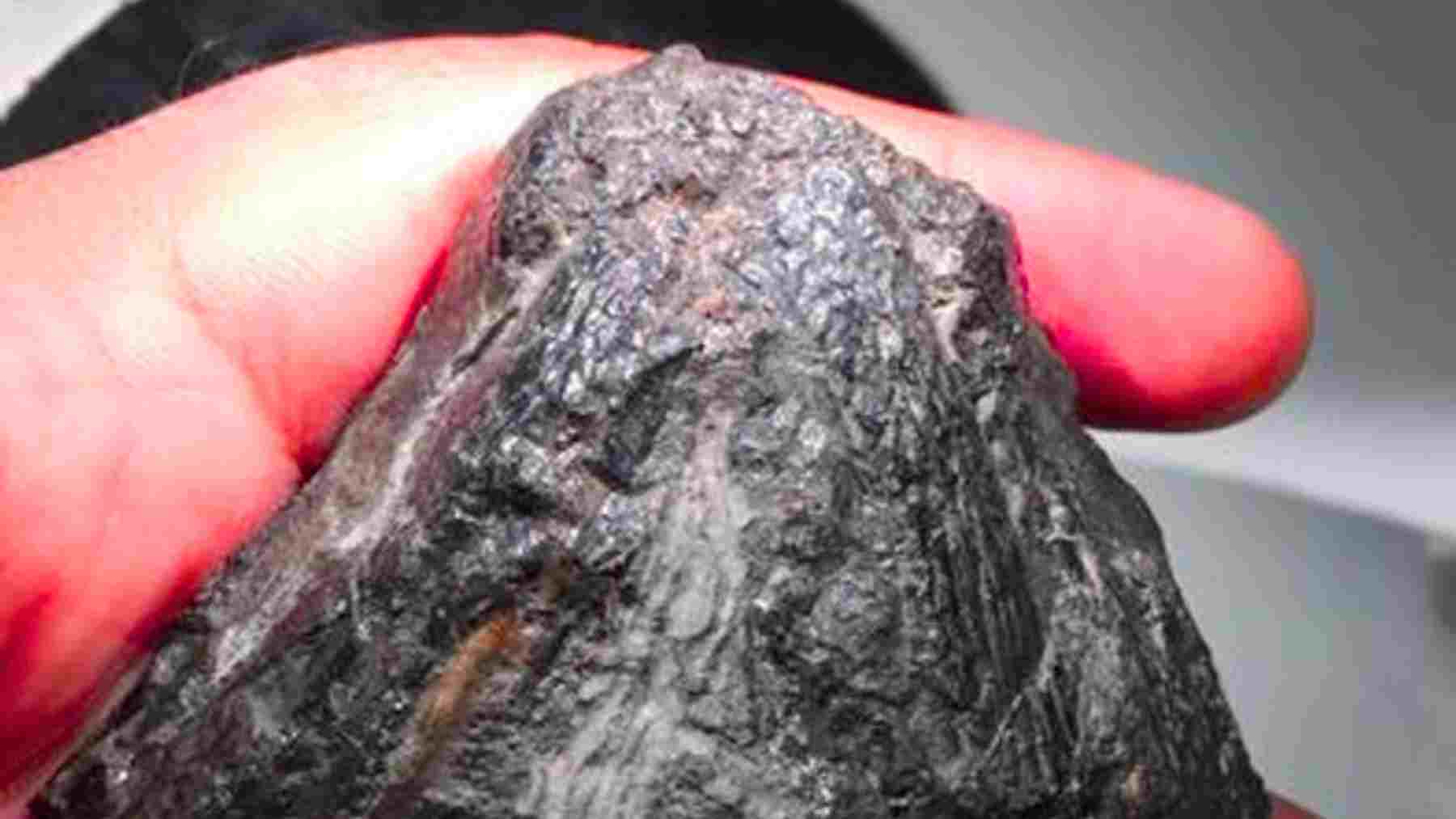
Inside a fossilized tree stump on Cape Breton Island, Nova Scotia, a heart-shaped skull waited for a second look.
Using the find, Arjan Mann, Ph.D., at the Field Museum of Natural History in Chicago linked its teeth to a plant diet.
Mann and colleagues named it Tyrannoroter heberti and described a body about the size of a soccer ball. With only head bones preserved, the case for plant eating rises or falls on what those teeth did.
Teeth built for plants
Across the palate, thick rows of teeth created a broad chewing surface, far larger than the edge teeth alone.
Each row met matching teeth on the lower jaw, so the bite supported herbivory, getting most calories by eating plants.
“This huge amount of surface area on its palate, covered with large, robust teeth, is probably a key adaptation to herbivory,” Mann explained.
Without that extra chewing surface, the animal would have faced a hard limit on how much plant matter it could handle.
Wear marks confirm
Microscopic scuffs on the teeth gave away repeated grinding, the kind of motion meat rarely requires.
To map those wear facets, polished patches where teeth rubbed together, the team used X-ray scans and high-power microscopes.
In that pattern, “Other animals with similar wear facets are herbivores in later periods,” Mann noted.
That match strengthened the case for plant food, even though no stomach contents survived with the fossil.
A new diet
Plant eating in land animals appears earlier than many textbooks expected, and T. heberti suggests the switch happened fast.
Among tetrapods, four-limbed animals that include amphibians and reptiles, the path may have run from insects to plants.
On the timeline, that development came not long after four-limbed animals had fully moved onto land.
Before leaves became lunch, insect meals may have supplied stepping-stone nutrients, but plant digestion demanded new internal hardware.
Digestion needed guts
Grinding plants solves only half the problem, because leafy food holds its calories inside stubborn fibers.
Most of that fiber is cellulose, a tough plant wall material, and animals rely on microbes to break it apart.
To keep those microbes working, early herbivores likely carried bigger guts, which would have made the body wider.
None of that soft tissue fossilizes, so the skull hints at digestion changes that the rock still refuses to show.
Ecosystems change fast
Once animals started eating plants directly, energy moved through fewer steps and supported new kinds of communities.
Cutting insects out of the menu also rewires who competes for food, since plants sit at the base of land ecosystems.
By biting leaves and stems, early herbivores likely influenced which plants grew back, and which ones disappeared from a patch.
That kind of pressure could build quickly, but it depended on stable forests that kept fresh vegetation within reach.
Climate pressure builds
Late in the Carboniferous, a coal-forest era that left much of today’s coal, wetter habitats began to break apart.
A paper traced how rainforest collapsed fragmented habitats and left early tetrapods isolated in smaller refuges.
When familiar plants vanished, many specialized feeders likely lost their food source, even if they survived the heat.
Such climate stress helps explain why early plant-eating branches could bloom quickly and then fade before leaving many fossils behind.
Family tree reshuffles
Placement on the vertebrate family tree matters, because it decides whether plant eating started once or many times.
Evidence from related fossils suggests similar tooth setups appeared in more than one lineage, rather than spreading from one ancestor.
Inherited palatal teeth from water-dwelling ancestors may have given some groups a head start when plants became worth chewing.
Uncertainty remains, so future finds could move T. heberti closer to reptiles or farther away without changing its teeth.
Fossils go digital
Digital tools let scientists study fragile fossils without grinding them down, and the T. heberti skull benefited.
Modern techniques turn X-ray slices into 3D models that can be printed, shared, and compared in safety.
Researchers then printed replicas for close inspection, which kept the original skull protected while still letting people hold the shape.
Because the data travel easily, future finds can be compared against the same digital skull, even across continents.
Where this leads
A single skull, its teeth, and its wear patterns tie early plant eating to a moment when land life was still new.
More complete skeletons and more sites will decide how common that experiment was, and how climate upheaval shaped its fate.
The study is published in Nature.